


Financial services has always been unforgiving to the unprepared. Regulations shift overnight, competitors emerge from unexpected quarters, and technology rewrites established practices with alarming frequency. For firms operating in specialised niches such as education financing, where every decision must balance commercial viability with social responsibility whilst navigating complex family dynamics and uncertain repayment prospects.
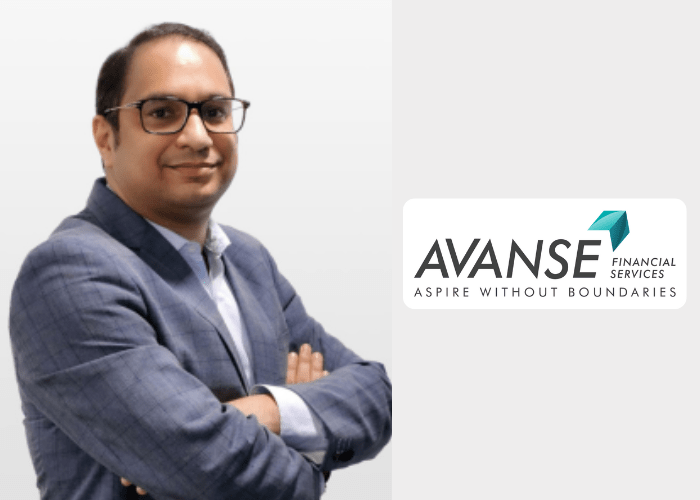
Avanse Financial Services believes it has found an answer in what it calls “continuous development”—embedding learning into employees’ daily work rather than relegating it to annual training calendars. The company’s chief people officer, Achal Goel, distils this philosophy simply: “Careers are journeys, not checkpoints.”


From this conviction has emerged an elaborate learning framework comprising three flagship programmes and function-specific training modules. But does such intensive investment actually translate into better business outcomes, or does it represent expensive over-engineering of what should be straightforward professional development?
The value of continuous learning
Corporate training has evolved beyond predictable patterns of compliance sessions, skills workshops, and leadership retreats. Today, forward-thinking organisations view learning as a continuous journey that extends well beyond induction, embedding knowledge and capability into everyday decision-making.
The financial-services sector offers instructive lessons on why this approach matters. Wells Fargo’s extensive compliance training underscored the importance of aligning learning with organisational culture, while Volkswagen’s experience highlighted that empowering employees to make ethical, informed decisions requires more than procedural knowledge—it demands ongoing, contextual learning.
“Guided by our HR pillar of ‘maximising learning’ and one of our cultural pillars, ‘meritocracy’, our L&D strategy is designed to nurture talent at every stage of their professional lifecycle.”
Achal Goel, CPO, Avanse Financial Services


“Guided by our HR pillar of ‘maximising learning’ and one of our cultural pillars, ‘meritocracy’, our L&D strategy is designed to nurture talent at every stage of their professional lifecycle,” emphasises Goel.
The principle is clear: when training is thoughtfully designed, culturally aligned, and continuously reinforced, organisations can cultivate adaptable, empowered teams capable of thriving in a complex business environment.
Culture first, competence second
Avanse’s approach begins with Swagatam, an onboarding programme designed to transcend administrative formalities. New joiners gain early access to senior executives and functional leaders—unusual in hierarchical Indian corporate culture—ostensibly to humanise leadership and signal transparency.
“First impressions matter, which is why Swagatam is designed to be immersive and engaging. We draw on a blend of manager and executive feedback, which highlights real-time needs observed in day-to-day performance, as well as data-driven insights from productivity trends, customer feedback,” Goel maintains. The programme attempts to blend operational readiness with cultural immersion, introducing not just job requirements but organisational values and decision-making processes.
Once employees settle in, the SEED programme (Skill Enhancement and Employee Development) takes over. Unlike static training calendars, SEED operates through what the company calls a “live feedback loop”—drawing on manager inputs, performance data, customer feedback, and participation trends to identify emerging skill gaps.
Recent emphasis on digital fluency, including AI-driven tools for everyday tasks, reflects the sector’s technological evolution. The adaptive model sounds progressive, but managing constant curriculum updates and expert-led content requires significant resources. When questioned about costs, Goel points to improved engagement and retention as justification, though concrete return-on-investment data isn’t provided.
The leadership crucible
Perhaps Avanse’s most interesting challenge lies in transforming individual contributors into effective managers through its internal programme. This transition often unsettles even high-performing employees, who suddenly find themselves responsible for leading teams rather than completing tasks.
“Moving from an individual contributor role to a people leader requires a complete mindset shift from focusing on one’s own outcomes to enabling the success of an entire team. Our LEAP programme is built to support this transition in line with Avanse’s cultural pillars and success anchors,” acknowledges Goel.
The internal programme’s curriculum blends governance-based decision-making with essential soft skills such as inclusive communication, empathy-driven conflict resolution, and accountability that inspires trust. Participants also learn to apply core management imperatives, including embracing design thinking, staying close to customers, adopting a consultative approach, driving innovation, ensuring cost efficiency and productivity, leveraging automation, and celebrating people-driven successes.
Through a combination of workshops and mentoring, the programme helps first-time managers grow into confident, capable leaders who drive performance, inspire their teams, and reinforce Avanse’s “One Team, One Experience” culture.
Specialisation versus generalisation
Given Avanse’s niche focus, function-specific training becomes essential rather than optional. Sales teams learn consultative engagement, positioning themselves as family advisers rather than product pushers. Credit teams focus on market interpretation, repayment assessment, and regulatory compliance. Collections staff—handling perhaps the most sensitive lending function—receive training balancing empathy with commercial necessity.
This tailored approach makes sense given education financing’s unique demands. Sales conversations often involve multiple family members with conflicting priorities. Credit decisions must account for uncertain career trajectories and varying repayment timelines. Collections requires navigating emotional conversations about failed educational investments.
The function-specific programmes are complemented by cross-functional initiatives aimed at preventing departmental silos.
Measuring the immeasurable
Naturally, the question arises: does this elaborate framework produce tangible results?
Avanse highlights rising employee engagement, increased internal mobility, and longer tenure as evidence of impact. Employees demonstrate greater confidence when transitioning across roles and functions, supported by visible career pathways and continuous upskilling initiatives that expand their competencies. From a retention perspective, the impact is equally strong—when employees feel valued, supported, and future-ready, they are more likely to build long-term careers with the organisation.
Beyond employee outcomes, Avanse also utilises the Net Promoter Score (NPS) as a key metric to assess customer experience and satisfaction. As of August 2025, its NPS stands at 81, reflecting strong customer advocacy and loyalty.
To further strengthen outcomes, the company employs certification-based assessments and feedback loops, enabling programmes to be continuously refined. While measurement remains a journey, Avanse’s commitment to investing in people ensures engagement levels are consistently reinforced and aligned with long-term organisational goals.
Future ambitions
Avanse’s next frontier involves enhancing personalisation in learning by leveraging AI-driven recommendation engines to curate individual training paths based on employees’ performance profiles and career aspirations. The company is also exploring ways to draw from international best practices in education and financial services, with a strong emphasis on adapting them thoughtfully to the Indian context to ensure relevance and impact.
By combining technology-led personalisation with carefully localised insights, Avanse aims to create learning experiences that are future-focused while remaining closely aligned with its people, customers, and market realities.
The trust equation
Avanse’s journey highlights a broader shift in corporate learning: programmes today are expected to serve not just as capability-development tools but also as trust-building mechanisms. Across industries, companies that invest meaningfully in employee growth signal that careers are long-term journeys rather than short-term roles, helping to foster deeper commitment and retention.
For Avanse, sustaining execution remains the key challenge—keeping initiatives dynamic, preventing training fatigue, and ensuring that learning frameworks are directly linked to measurable business outcomes. This reflects a concern shared widely across the financial-services sector, where the relentless pace of change demands not only technical upskilling but also cultural adaptability.
More broadly, organisations are recognising that the real value of learning lies in moving beyond compliance and one-off workshops to create continuous development ecosystems. While some question whether elaborate frameworks risk over-engineering, the emerging consensus is that thoughtfully designed, adaptive programmes can strengthen both performance and resilience.
Avanse’s experience illustrates this evolution. Its efforts to shift from static training calendars to continuous, contextual development mirror the direction many forward-looking firms are taking. The real test—for Avanse and the industry alike—will be demonstrating how intensive investment in human capital translates into sustainable business performance in increasingly competitive markets.
link